See What Is Underground Before Winter Rains Arrive
A sewer camera inspection gives you a clear look inside a sewer line before seasonal rain puts more pressure on drainage systems. October is a smart time for Livermore property owners to find hidden concerns while there is still time to plan a repair instead of reacting to a messy backup.
Because sewer pipes are buried, problems can grow quietly. Slow drains, unpleasant odors, recurring clogs, and water where it does not belong can all point to trouble below ground. As fall rain saturates the soil, existing pipe damage or drainage restrictions may become harder to ignore. Camera inspections can help you see what is happening without starting with unnecessary digging.
What a Sewer Camera Inspection Finds in Your Line
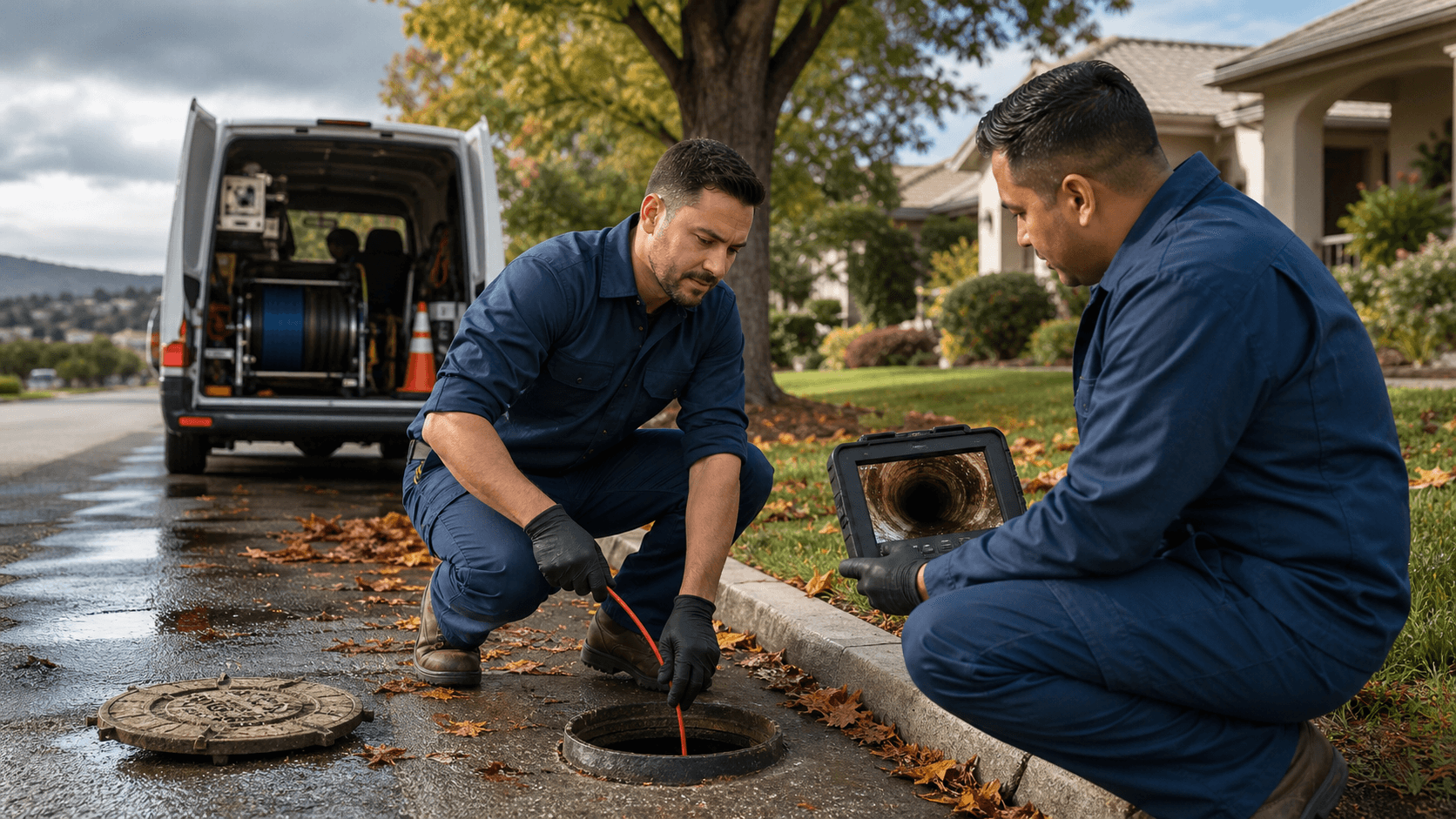
During a sewer camera inspection, a trained plumbing professional feeds a specialized waterproof camera through an accessible drain or sewer cleanout. The live video shows the inside of the pipe, giving the inspector a better understanding of its condition and the path wastewater takes away from your property.
Footage can reveal concerns that are difficult to confirm from symptoms alone, including:
- Tree root intrusion
- Grease, scale, or debris buildup
- Cracks, corrosion, and separated joints
- Foreign objects lodged in the line
- Low spots, often called bellies, where waste and water can collect
The camera also helps identify the approximate location and depth of a problem. That matters because a slow drain does not always mean the same thing. A buildup near the opening may call for professional drain cleaning, while a cracked or shifted pipe may need a different repair plan.
Mature landscaping, older pipe materials, and soil movement can all affect sewer lines in Livermore and throughout the Tri-Valley. Rather than guessing what is below the yard, floor, or parking area, recommendations can be based on visible evidence from inside the pipe.
Common Sewer Problems Winter Rains Can Make Worse
Rainfall does not create every sewer issue, but it can expose weak spots that were already there. When soil becomes saturated, it may shift around cracked, separated, or aging sewer pipes. A small opening can become a bigger problem if the pipe loses support or moves out of alignment.
Roots can also take advantage of tiny gaps at joints or cracks. Once roots reach the moisture inside a sewer line, they can spread and catch paper, grease, and other waste. What begins as a partial blockage may turn into a recurring backup if the line cannot move wastewater freely.
Pipe bellies are another concern. A belly is a sagging area of pipe where water and waste settle instead of flowing through. Combined with buildup or root growth, that low spot can lead to sluggish drainage, sewer odors, and pooling wastewater.
One clogged sink is often a fixture-level issue. Signs that may point to a main sewer line concern include:
- Several drains running slowly at the same time
- Toilets that gurgle when other fixtures drain
- Water backing up into a tub or shower
- Repeated clogs that return after clearing
- Sewage odors or wastewater appearing near a drain
When these signs show up, a professional sewer line evaluation can help instead of treating each fixture as a separate problem.
How a Sewer Camera Inspection Guides the Right Repair
Clear camera footage helps match the solution to the actual condition of the line. Not every issue calls for excavation or complete replacement. Sometimes professional cleaning can clear buildup, remove roots, or restore flow. In other cases, a targeted repair may make sense when damage is limited to one section.
The right recommendation depends on several details, including the pipe material, the severity of damage, where the issue sits, and whether the rest of the line remains in workable condition. A camera inspection provides information to discuss those choices more clearly.
Finding the exact problem area can also help avoid unnecessary digging. If a repair is needed, knowing where to focus allows for more informed planning around landscaping, driveways, and other parts of the property.
For lines with more widespread damage, trenchless sewer replacement may be an option depending on site conditions and the confirmed scope of work. Not every property is a fit for one repair method. The inspection comes first, followed by an explanation of what the camera shows and what steps make sense.
When a Sewer Camera Inspection Can Prevent an Emergency
Waiting until sewage surfaces or every drain stops working can leave you with fewer convenient options. A sewer camera inspection is especially helpful before winter rains, but it can also make sense after recurring backups or when your property has a history of drainage trouble.
It may be worth considering an inspection in situations such as these:
- An older home has never had its sewer line evaluated
- Drain clogs keep coming back after service
- Major landscaping or ground work has taken place
- You are buying or selling a property
- A commercial property has repeated drainage interruptions
For homeowners, catching a problem early can help prevent a backup from disrupting bathrooms, kitchens, laundry areas, or outdoor spaces. For property managers and business owners, an inspection can provide useful information before a drainage issue interrupts tenants, employees, or daily operations.
A professional assessment replaces assumptions with a real view of the pipe. If there is an active backup, wastewater coming up through fixtures, or urgent drainage trouble, prompt emergency plumbing help is the safer response.
Schedule Your Sewer Check Before the Rainy Season
A sewer camera inspection can uncover roots, blockages, cracks, shifted joints, and other hidden concerns before rain places added strain on the system. Early detection gives you more time to understand the condition of the line and consider the appropriate repair path.
Before rainy weather arrives, pay attention to recurring slow drains, gurgling toilets, odors, and backups affecting more than one fixture. Those warning signs are easier to address when they are investigated early, before a buried sewer problem becomes an indoor emergency.
Get Clear Answers About Your Sewer Line
A sewer camera inspection can identify the condition of your line and help guide the right next steps. Our team uses clear visual findings to explain what is happening below ground without guesswork. Contact us to schedule an inspection with The Otter Squad Plumbing & Drain Cleaning.